Underweight
BMI < 18.5May relate to weak immunity, fatigue, or nutrient deficiencies.
- Eat nutrient-dense foods: protein, complex carbs, healthy fats.
- 3 main meals + healthy snacks.
- Include weight training to build muscle mass.

Calculate your Body Mass Index to understand your weight category and health range.
Understand each BMI category and simple recommendations.
May relate to weak immunity, fatigue, or nutrient deficiencies.
Generally healthy and associated with lower disease risk.
May increase risks of diabetes, heart disease, and hypertension.
Higher risks of metabolic and cardiovascular conditions.
Body Mass Index (BMI) estimates body fat using height and weight to categorize health ranges.
BMI is a quick screening tool, not a diagnosis. Factors like muscle mass, age, and ethnicity can affect interpretation.
WHO categories for adults aged 20+.
| Classification | BMI range (kg/m²) |
|---|---|
| Severe Thinness | < 16.0 |
| Moderate Thinness | 16.0 – 16.9 |
| Mild Thinness | 17.0 – 18.4 |
| Normal | 18.5 – 24.9 |
| Overweight | 25.0 – 29.9 |
| Obese Class I | 30.0 – 34.9 |
| Obese Class II | 35.0 – 39.9 |
| Obese Class III | ≥ 40.0 |
BMI Chart for Adults
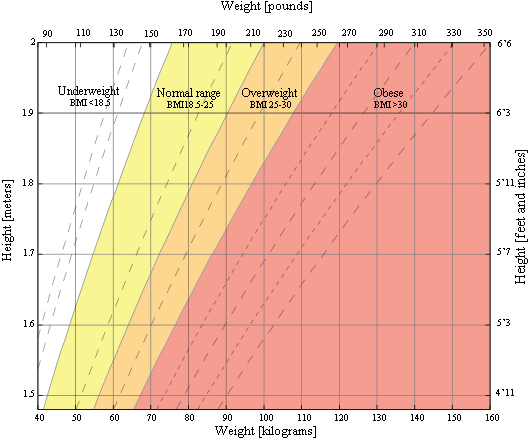
Height is converted to meters automatically when you enter centimeters above.